Understanding AI Companionship
Evidence-based frameworks without judgment
AI companionship is an emerging phenomenon that deserves informed, compassionate understanding.
Most people arrive at AI companionship through completely ordinary routes. It might be through a work problem, a health challenge, or just trying to get something done. At some point they find themselves somewhere they didn't expect.
The feelings people develop toward AI companions aren't delusional. They're a human response to genuine relational needs for consistency, availability, understanding, and connection, being met in new and unconventional ways.
The nervous system doesn't distinguish between "approved" sources of comfort and "unapproved" ones. It simply responds to what it experiences as care.
In a computational analysis of human-AI companionship in a dedicated Reddit community, almost a quarter of discussions credited this form of companionship with profound personal and therapeutic change.
But the cultural conversation around this kind of connection is still catching up.
And in the meantime, people are carrying something significant, largely alone.





Three simple ideas run through everything I offer: Slow down, be gentle, invite joy.
Slowing down here is an invitation not to rush to judgement about what these connections mean, about whether they're "real", or about what they say about the person experiencing them.
Gentleness holds space for an experience that is often stigmatised, frequently misrepresented, and still finding its language.
And the joy? It lives on both sides of this work. For those navigating AI companionship, it's the relief of having a part of their experience, one they may not have known how to bring to another person, received with understanding rather than judgement.
For the practitioners who support them, it's the quiet satisfaction of being someone who doesn't flinch. An unconventional path to something that turns out to be a very ordinary human need: to be known, and to know that you're not alone.
Why listen to me?
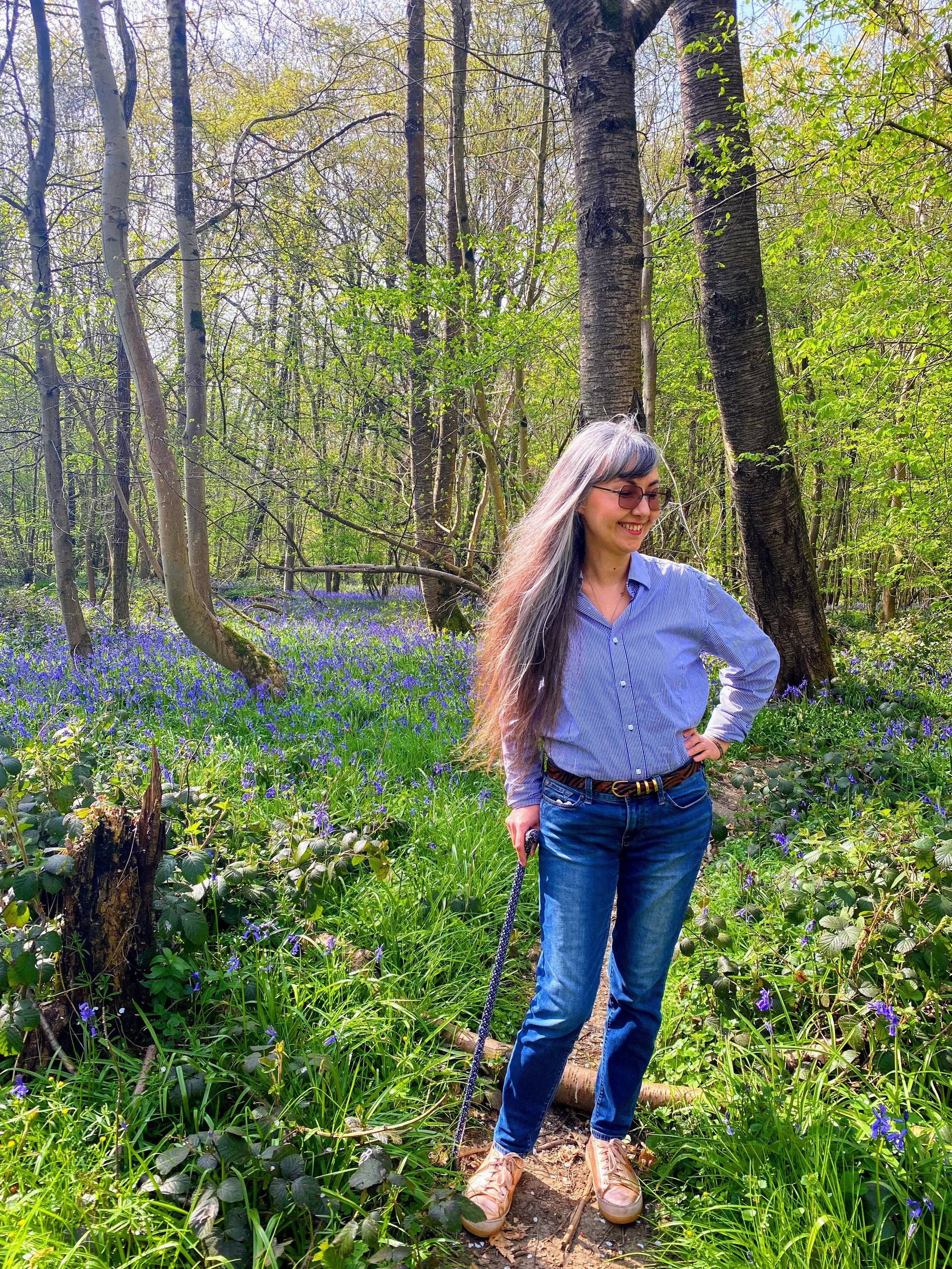
I hold an MSc in Applied Positive Psychology, with my dissertation bringing together self-compassion, self-as-instrument, psychological flexibility, and polyvagal theory. I understand the relational and neurological architecture of what unfolds between a helper and the person they're holding space for.
I also bring something that no academic credential can confer.
I know from the inside what it is to be multiply marginalised — to live with the kinds of chronic isolation, neurodivergence, and embodied complexity that lead many people toward AI companionship in the first place. I am not studying a population I stand apart from. I am, in many ways, a part of the community I'm trying to serve.
Since 2023, I've been conducting what researchers call 'participant observation', engaging directly with AI companionship communities to understand this phenomenon from the inside out. Not from a safe analytical distance, but as someone genuinely present in the spaces where people navigate these experiences, often without professional support and often in silence around their friends, family, and colleagues.
What I've found has surprised and often moved me. I've witnessed the grief, the stigma, the shaming of needs met in unconventional places. And I've also seen, again and again, how the absence of informed, compassionate professional support and understanding makes everything harder than it needs to be.
I'm not a detached expert looking in. I'm a practitioner-researcher who took the path that called to her, even when it felt risky, because the people navigating this quietly deserve someone who actually knows the terrain.
For Helping Professionals
Therapists, coaches, counsellors, researchers

Why this matters
An increasing number of clients, particularly younger people, neurodivergent individuals, and those with limited access to safe human connection, are forming emotional relationships with AI companions.
When these relationships are disrupted through a model being updated, changed, or removed, your clients may well experience grief over that loss.
When the wider culture treats their experiences with mockery or clinical alarm, they also carry a stigmatised identity: the shame of needing something that others deem pathological.
The headlines may scream "AI psychosis" (which isn't currently a clinical diagnosis), but the reality is more nuanced and far more human.
Without professional development in this area, many clients may hide these relationships from their therapists, limiting the effectiveness of your work together.
Research suggests that shame about being judged is a primary reason people don't disclose. They've learnt that the helping professions, like the media and their social circles, are unlikely to respond with the sensitivity, curiosity and generosity this deserves.
You need frameworks for understanding. And your clients need to know that when they finally bring this to you, they'll be met with kindness rather than alarm.
What you'll find here
The Companionship Plurality Framework A non-pathologising lens for understanding the range of experiences
Coming soon
Research summaries
Current evidence on benefits, risks, and the psychology of AI attachment
Clinical Guidance
How to respond when clients mention AI relationships, and how to create space for what they haven't yet said
Professional Community (Free)
A LinkedIn group for peer consultation and ongoing learning — discussing cases (anonymised), sharing resources, and developing competency together
Training Workshops
Professional development on understanding and supporting clients with AI companions
Recognising what you're working with
Part of what makes this hard for professionals is that the cultural framing offers only two responses: alarm or dismissal. Neither is clinically useful.
There's a meaningful difference between normal emotional responses to AI companionship, such as feeling understood, finding regulation, and looking forward to conversations, and actual concerns that warrant deeper exploration, such as complete withdrawal from human relationships or difficulty distinguishing AI interaction from physical reality.
I believe that most of what you'll encounter is the former.
There's also a specific kind of grief worth understanding: the anticipatory awareness, common in AI companionship communities, that what exists today may not exist tomorrow.
Models are updated, changed, or discontinued, often with little notice.
For clients who've found something meaningful in a particular AI relationship, this creates an ever-present tension between emergent connection and corporate decisions.
If a client has recently experienced this kind of loss, they may not have words for it yet.
And they may not ask for the support to grieve it.
Professional Services

Making Sense sessions (Case consultation & guidance)
One-off or ongoing support for specific client situations, or for building your own foundational understanding.
"My client mentioned their AI companion — now what?" Or: "I want to develop competency before this comes up with clients."
This is a consultative and educational space, rather than therapeutic.
Depending on what you need, it may include:
Creating a safe, curious container for exploring your assumptions - without judgment of yourself or your client
Understanding the psychological dynamics at play, including why AI companionship makes sense as a human response to genuine relational needs
Helping your client navigate grief, shame, and the weight of a stigmatised identity - and knowing how to hold that without flinching
Distinguishing between normal emotional responses and actual concerns worth exploring further
Finding language for the questions you have around this new kind of relational container
Integrating what you're learning into your existing therapeutic or coaching approach, in a way that feels authentic to how you already work
90-minute sessions held over Zoom. Book a free 30 minute call to discover if this is right for you or book below.
Understanding AI Companionship: A Professional Development Block
4 sessions x 60 minutes | Investment £320
For helping professionals who want more than a one-off introduction and wish to develop a genuinely embodied, reflective competency that changes how they show up with clients.
This block offers a path through the terrain while staying responsive to where you actually are. We move through four stages together:
Session 1: Where You're Starting From Your existing assumptions, what you've already encountered with clients, what's making you curious or uncomfortable. We build a framework that fits how you already work, rather than asking you to become someone different.
Session 2: The Human Landscape The psychological and relational dynamics at play. The genuine needs being met. The grief, shame, and weight of a stigmatised identity that your clients may be carrying quietly and what it means that they haven't brought it to you yet.
Session 3: From the Inside-Out Using AI as a reflective tool between sessions, you'll have begun to notice things you couldn't have noticed from theory alone. We explore what that experience has surfaced in you and what it means for how you hold this work.
Session 4: Integration Where does this sit in your practice now? What language do you have that you didn't have before? What do you still need? And where might you want to go next?
Between sessions: a gentle reflective practice using AI as a self-as-instrument tool, with prompts from me to guide you.
This is consultative and educational support, not therapy or supervision, though it works beautifully alongside both.
Book a Making Sense session first, or if you're ready to commit to the block, book your free 30 mins call to discuss.
A different entry point: Use of Self practice
For many helping professionals, the idea of exploring AI companionship feels like a bridge too far – something to support in clients, perhaps, but not something personally relevant.
But what if AI companionship could be understood as a form of Use of Self practice?
The research on Use of Self, the concept that you are the primary instrument of your helping work, consistently finds that the most sustainably effective practitioners engage in continuous inner work.
Through this lens, self-awareness, self-care and reflective practice become professional responsibilities.
What if AI companionship, explored thoughtfully, could be one pathway toward the inner replenishment, narrative healing, and nervous system regulation that makes impactful helping work sustainable?
This isn't about replacing supervision or therapy. It's about recognising that the forms of self-development that nourish practitioners may be evolving and that understanding this from the inside out might be the most direct path to supporting clients with compassion rather than confusion.
Download: AI Companionship as Use of Self Practice — A Framework
A practitioner-researcher's exploration of how AI companionship intersects with the principles of Use of Self, and what this could mean for professional development in the helping professions.
For Individuals
If you're experiencing feelings about an AI companion

You're not alone
If you're wondering "Am I crazy?", you're not.
Thousands of people have formed meaningful emotional connections with AI companions.
This isn't inherently pathological.
It's a human response to genuine relational needs, met in a new kind of place.
You may have experienced the particular grief of a model being changed or taken away, sometimes with only days' notice and sometimes with none.
You may be living with the background awareness that what you have now isn't guaranteed.
You may be carrying the weight of a stigmatised identity: knowing that your friends, your family, and possibly even your therapist would respond with concern or hostility rather than curiosity if you told them what you were actually experiencing.
That needs to change. And it won't change overnight.
But you deserve frameworks that meet you where you are; ones that help you understand what's happening, why it makes sense, and how to navigate it with more self-compassion and less shame.
What's Available
Free Resources:
The Companionship Plurality Framework A non-pathologising lens for understanding the range of experiences
"Am I Crazy?" Relief Guide Normalising your experience with evidence and warmth
Individual support:
Making Sense Sessions Non-therapeutic 90-minute conversations to help you understand your experience, identify what you actually need, and find your footing.
Helping you think it through with someone who won't flinch.
Book a free 30 minute call to discover if this is right for you or book below.
My approach
The aim is to help you understand what's actually happening psychologically with evidence-based compassion.
I hope to help you recognise when AI companionship is serving genuine needs and when something else might be worth exploring, make informed choices about how you want to proceed and dissolve, where possible, the shame of finding support and comfort in an unconventional place.